
Dental Bridges vs. Dental Implants: Which Is Right for You in 2026?
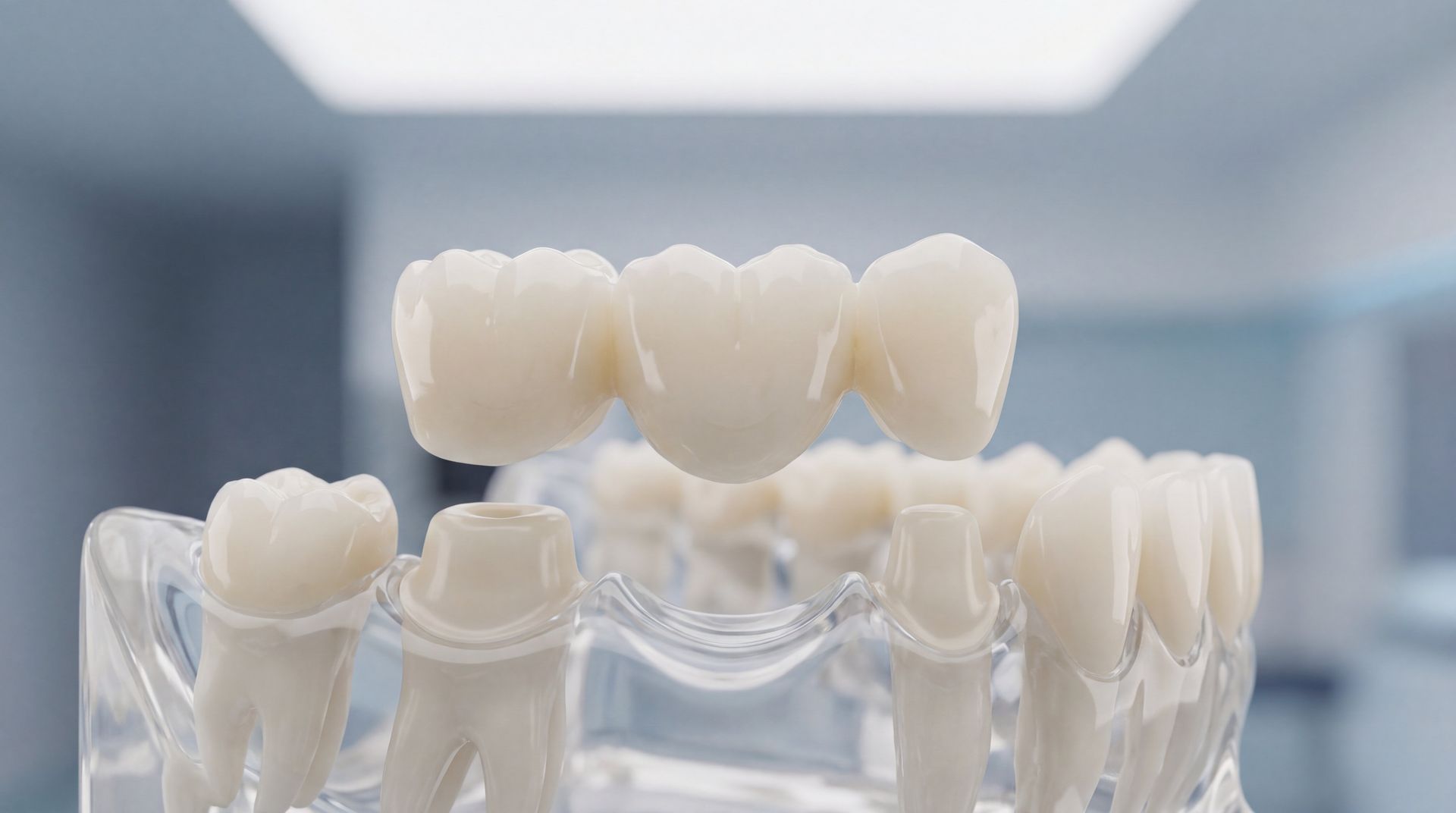
Choosing between dental bridges and dental implants is a common tooth-replacement decision for patients in Richmond, VA, with real differences in candidacy, procedure, longevity, and daily care.
Leaving the gap untreated can cause neighboring teeth to shift, create bite problems, and lead to jawbone loss, so understanding how the two options differ helps you walk into a consultation informed.
What Is a Dental Bridge and How Does It Work?
A dental bridge fills the empty space left by a missing tooth without surgery. A false tooth, called a pontic, is held in place by crowns fitted over the healthy teeth on either side of the gap, typically completed in two to three appointments over a few weeks with minimal healing time.
Bridges are a practical choice for patients who want a faster path to a restored smile or are not candidates for surgery due to health conditions or low jawbone density.
Key Features of a Dental Bridge:
- No oral surgery required.
- Completed in two to three visits over several weeks.
- Supported by crowns on adjacent natural teeth.
- May need replacement after roughly ten or more years.
What Makes a Dental Implant Different?
A dental implant replaces a missing tooth at the root level. A titanium post is surgically placed into the jawbone, fuses with bone over several months, and is then topped with a crown. Implants do not rely on neighboring teeth and help preserve jawbone structure over time.
Key Features of a Dental Implant:
- Requires oral surgery and a healing period of several months.
- Stands independently without altering adjacent teeth.
- Helps maintain jawbone density after tooth loss.
- Can last many years or a lifetime with proper maintenance.
Dental Bridges vs. Implants: How They Compare
A few key factors set the options apart. Bridges skip surgery and take only weeks; implants need several months of healing but stand independently of adjacent teeth. Implants also help preserve jawbone density, while bridges offer limited benefit there and typically last ten or more years versus a lifetime for implants with proper care. Bridges need a floss threader beneath the pontic; implants require only standard brushing and flossing.
Common Questions About Bridges and Implants
How Do You Know Which Option Is Right for You?
A dentist will evaluate your jawbone density, tooth health, and goals. Bridges may suit you if you want a quicker solution, prefer to avoid surgery, or have adjacent teeth that need crowns; implants may be the better fit with adequate bone volume.
Can I Get a Bridge for Multiple Missing Teeth?
Yes, bridges can span more than one missing tooth; your dentist will assess whether a bridge or implant-supported solution suits your gap best.
Does Implant Surgery Hurt?
Most patients report more comfort than expected under local anesthesia. Any soreness or swelling afterward is normal and manageable with over-the-counter care.
Are Bridges or Implants Covered by Insurance?
Coverage varies by plan; many plans contribute to bridge procedures, while implant coverage is less consistent, so check with your provider before treatment.
Take the Next Step Toward a Complete Smile in Richmond, VA
Both options restore your ability to chew, speak, and smile with confidence, and the best path forward is a personalized consultation.
Drs. Oley, Shaia & Associates serves patients throughout Richmond, VA, with comprehensive restorative dentistry, including bridges and implant evaluations. Call (804) 282-7011 to request a consultation or contact the office online.
Find them and read patient reviews on Google.